
Russian Olive: Sharp Thorns, Soft Medicine
My first sip of this tea was a revelation.
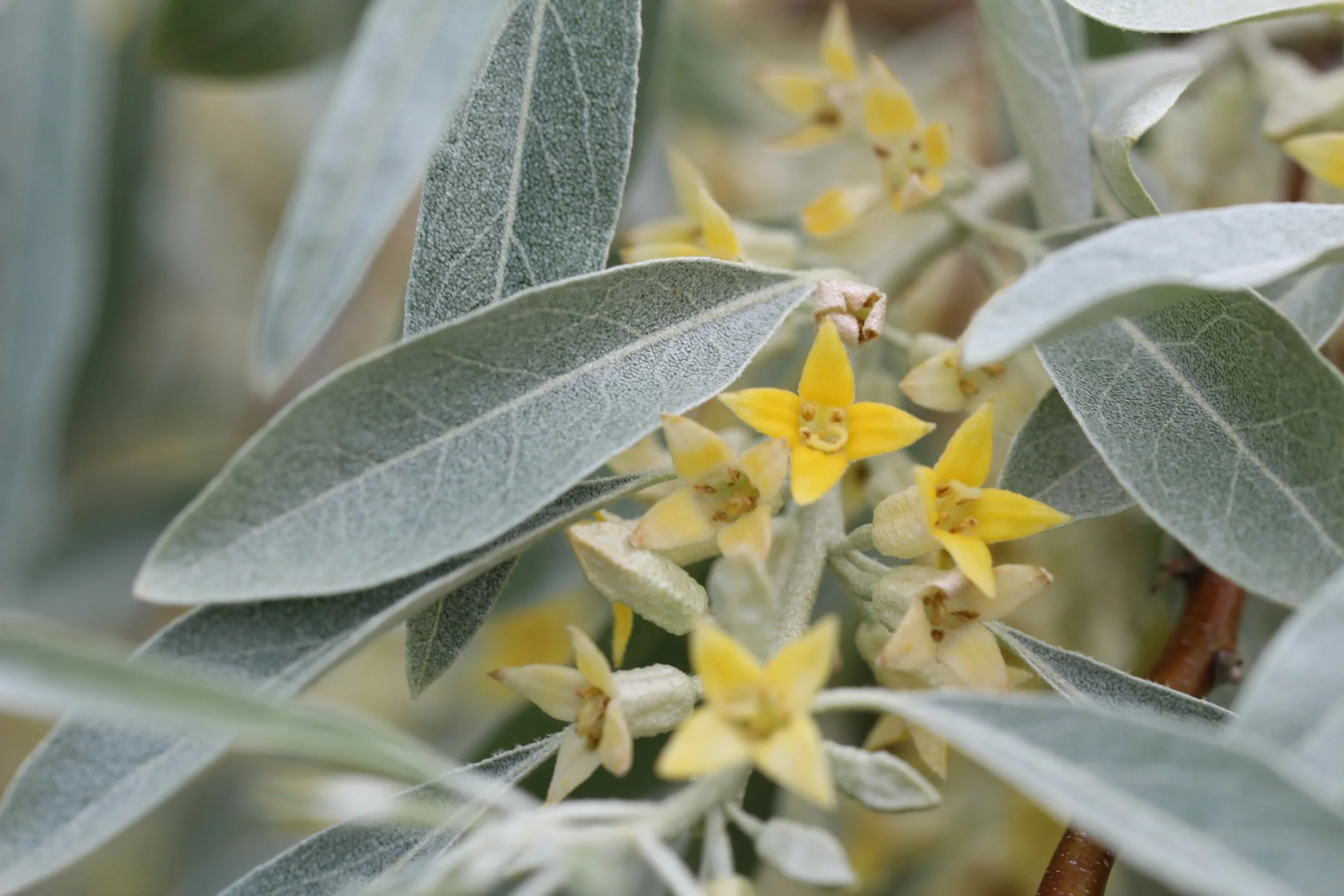
Russian Olive, Eleagnus angustifolia, in flower
In my childhood home of Connecticut, I learned about Russian Olive, and its close relative the Autumn Olive, as being an invasive species, not exactly evil, but definitely undesirable. These thorny, dense shrubs/trees would take over areas that had been disturbed, completely pushing out and keeping out native species of all kinds.
As a young adult obsessed with wild foods, I learned about eating the red, sour fruits of Autumn olive in jams, sauces, and fruit leathers. After moving to the Southwest, where the Russian Olive tends to thrive more, I quickly found that the astringent, mealy fruits of this species were not to my taste.
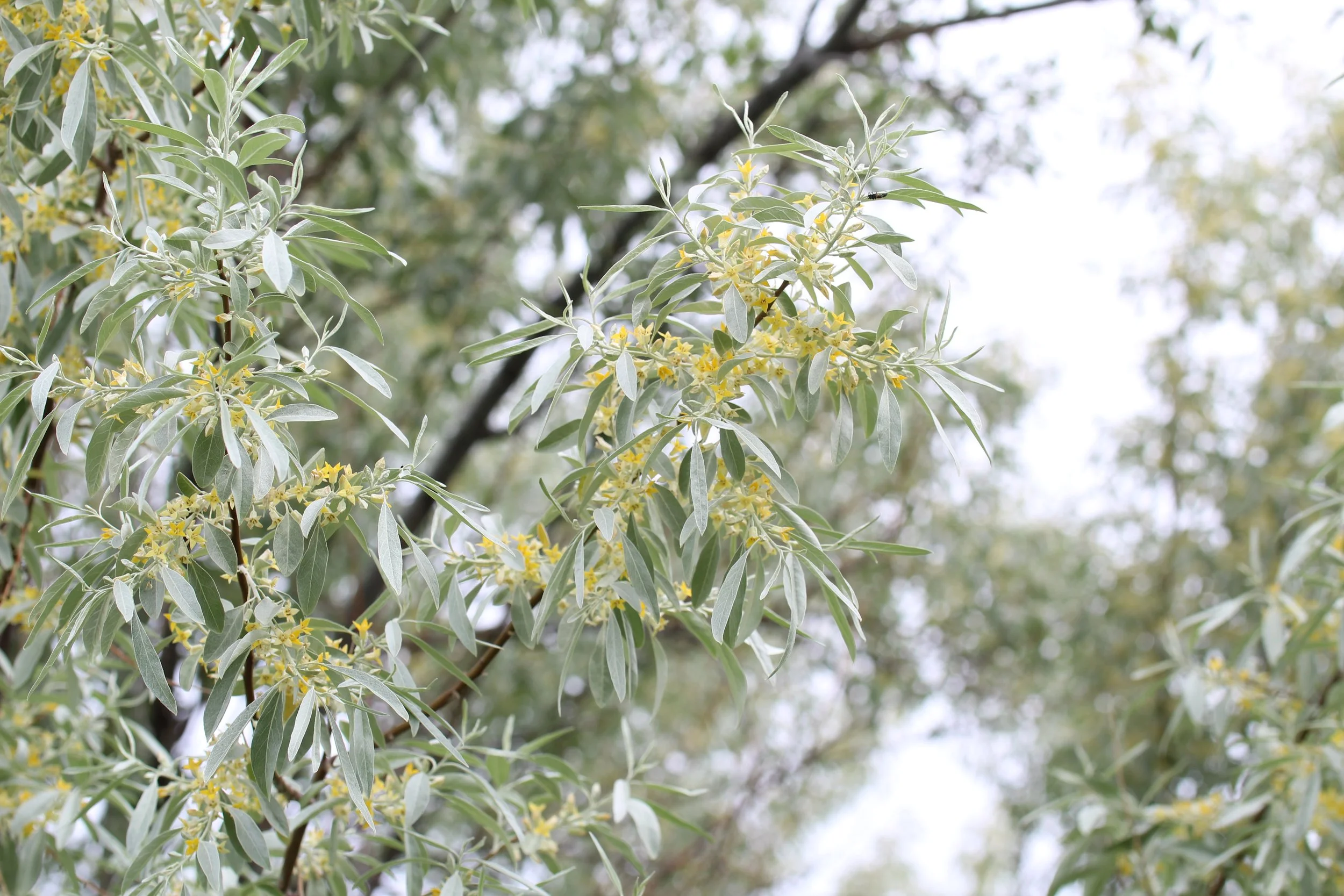
Russian olive flowers from late spring to early summer, with a beautiful, sweet smell.
Then in 2023, Matt Springer of Grey Owl Gardens was giving out tastings of Russian Olive decoction at an event I was co-running - and it was magic. This weedy, thorny, mealy species was transformed into a rich, sweet tea, with a flavor somewhere between black tea and dates. Since then, I have been collecting the leaves and fruits of this abundant and sturdy species each fall, and drinking gallons of the stuff, both on its own and blended with other herbs.
I’ve also been researching the history of this plant within traditional Persian medicine, as well as current studies regarding its medicinal nature. The more I learn, the more I can’t believe I didn’t know about this herb sooner. Okay, let’s dig in!
Elaeagnus angustifolia
Russian Olive, Persian Olive, Silverberry, Senjed
Elaeagnaceae, Oleaster Family
Vitalist Actions and Energetics: Cool and moist, relaxant
Clinical Actions: Nervine, anti-inflammatory, sedative, anti-spasmodic, demulcent, astringent, nutritive, digestive aid, diuretic, analgesic
Parts used: mature leaves & fruits
The most profound effect I’ve noted for myself and others with this herb is the relaxant effects. I’ve used this as a sweet, pleasant beverage for winding down in the evening. It’s been especially useful when my partner and I go through periods of not consuming alcohol (sober October style), and want a relaxing replacement. While it doesn’t have the stronger hypnotic sleepytime action of herbs such as hops or skullcap, its sedative and body-relaxing qualities are undeniable.
This lines up with the traditional Persian and Iranian herbalism, where it has a notable use as a calming and pain-relieving remedy, especially in relation to what we’d translate in Western herbalism as inflammatory conditions. The fruit, called Senjed in Farsi, and leaves are used in Iranian herbalism to work with inflamed connective tissue and joint conditions, such as arthritis, and as a general muscle relaxant. Those same muscle relaxant and anti-inflammatory actions are also likely associated with its use in working with digestive colic and upset.
Due to its traditional use, Russian olive is now being studied to determine its constituents and mechanisms of action. While most of the studies are only in vitro (in a petri dish) or in vivo (in a living body) with mice, the findings are lining up with the traditional indications and uses so far, which is encouraging more robust clinical trials and human studies.
Here are a few of the articles if you’d like to get especially nerdy!
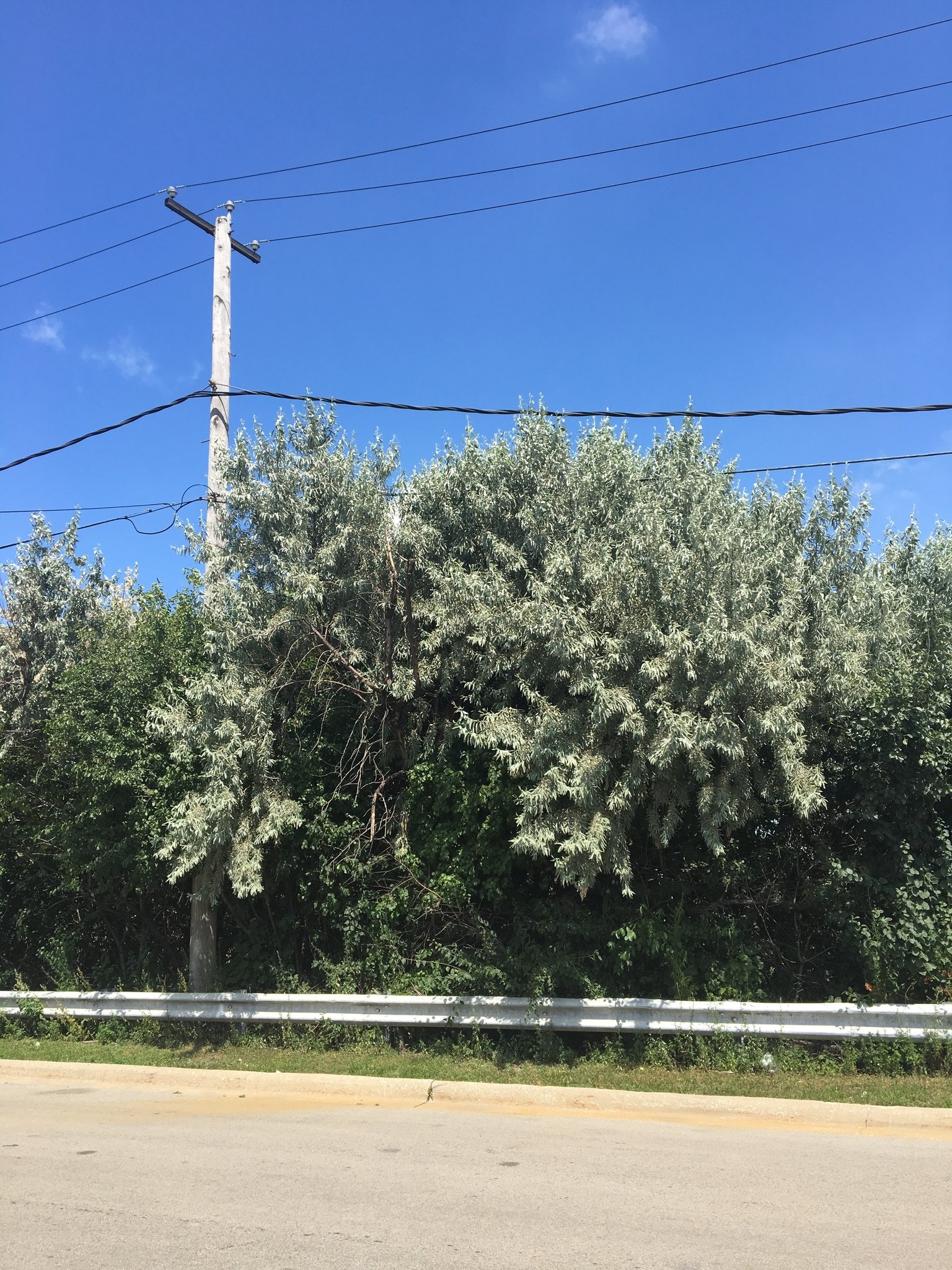
Russian Olive hanging out like a big ol’ shrub on the roadside.
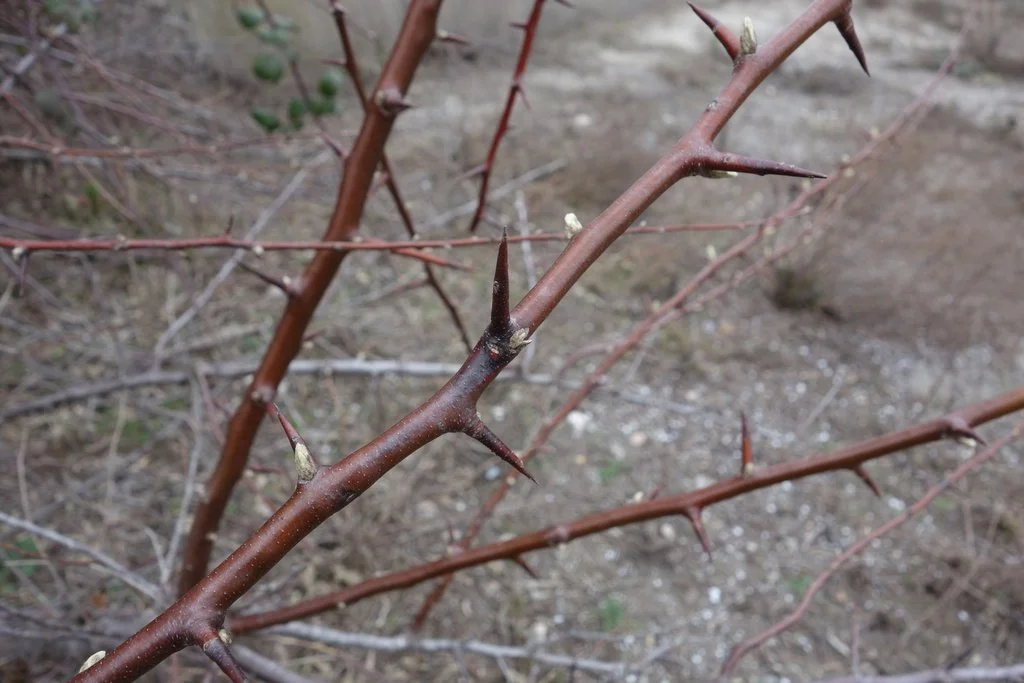
Young branches of Russian olive, compete with fairytale length thorns - yeesh.
Botanical Identification
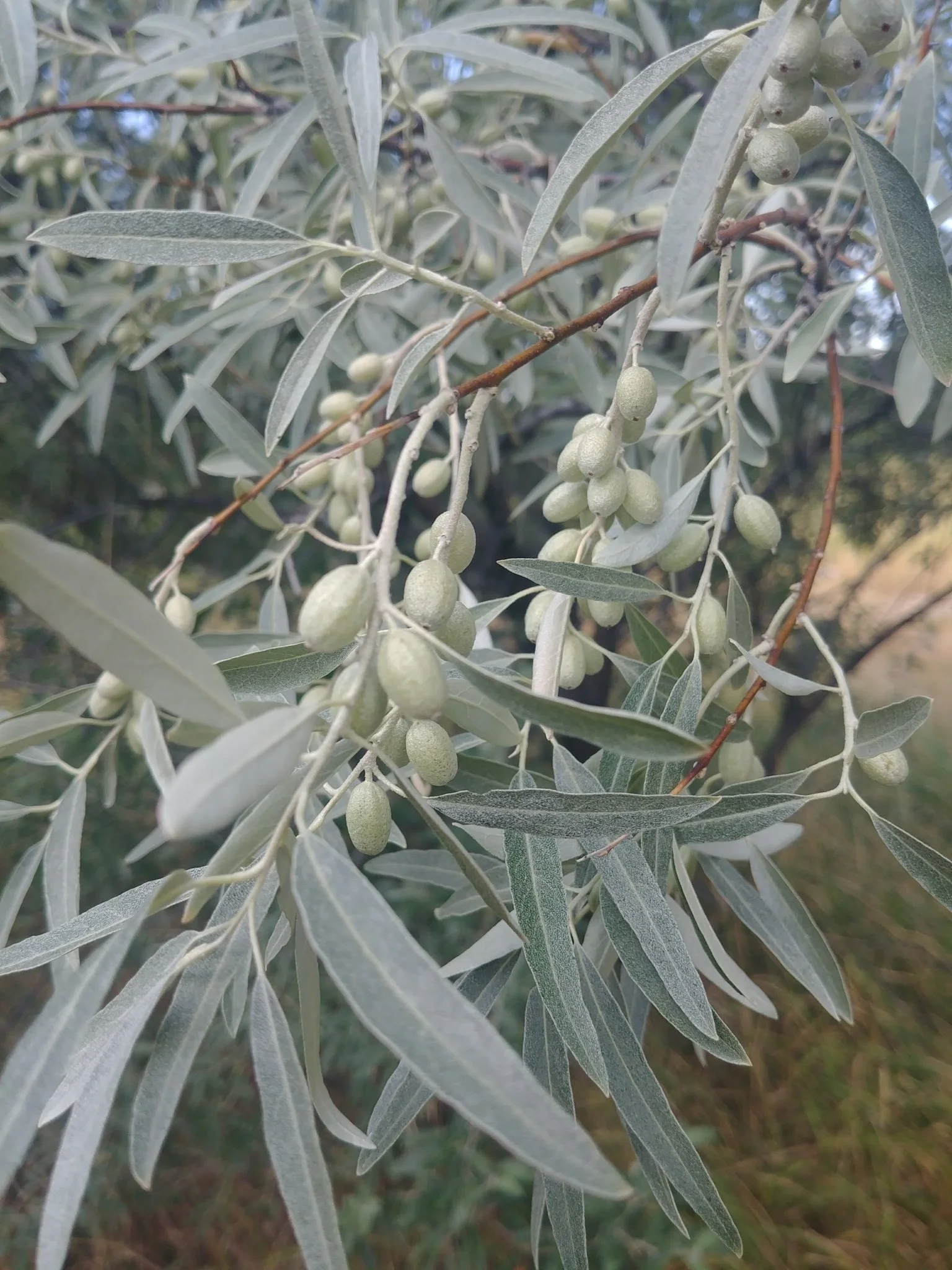
Leaves and Immature fruit of Russian olive
Habitat: These friends LOOOOVE disturbed habitat. Coupled with their tolerance for saline (salty) soil and drought, they tend to crop up by along roadsides, train tracks, and abandoned agricultural land.
Habit: While they most often show up as large shrubs about 10-20 feet high and wide, Russian olives can grow up to 40 feet, and be much more tree-like in form, with a large centralized trunk.
The bark of the young branches is often shiny, and a dark brown to reddish hue. They are often covered in large, sturdy thorns up to 2 inches long. Yikes. one of the main things to watch out for when harvesting! The older bark is a dark brown to grey, with a fibrous, shreddy nature. The branches, leaves are alternate in their arrangement.
Leaves: The leaves are grey green on the top, and almost white underneath, and lance-shaped. The pale, silvery sheen of the leaves is due to a fine layer of peltate scales - the underside of the leaves is especially dense with these, hence the lighter color. These trees practice marscensence - meaning they will often keep their leaves until early winter.
Flowers and Fruits: Blooms in the late spring-early summer, with 4-petaled, yellow flowers, in clusters of 3-4. The aroma from large groups of these trees can be almost overwhelming - a mix of jasmine, honey, and some mysterious, earthy something else.
Native to Asia and Eastern Europe, Elaeagnus angustifolia was introduced to North America in the 19th century as a windbreak and ornamental. It has since spread throughout Turtle Island, and present in 46 of the lower 48 US states. In some regions, such as CT, CO, NM, and WY, it’s made it onto the noxious weed list, and is actively targeted for removal by various governmental agencies.
An interesting side note - Russian olives are nitrogen fixers, one of the few non-pea family members who do that.
Medicine Making
Long decoctions are by far my favorite way to take this medicine. I use 1 large handful of leaves and fruits to 1 quart of water. I like to make this in an Instant Pot, and usually make about 1/2 gallon at a time, letting it cook on high pressure for an hour. If you had it simmering on your stove top or in a crockpot, you’d want to go for longer, around 3-4 hours to get that sweetness from the tea.
Once strained, the tea will last a few days to a week in the refrigerator (remember, tea is like vegetable soup - it has a limited shelf life! And the quicker you refrigerate it, the better).
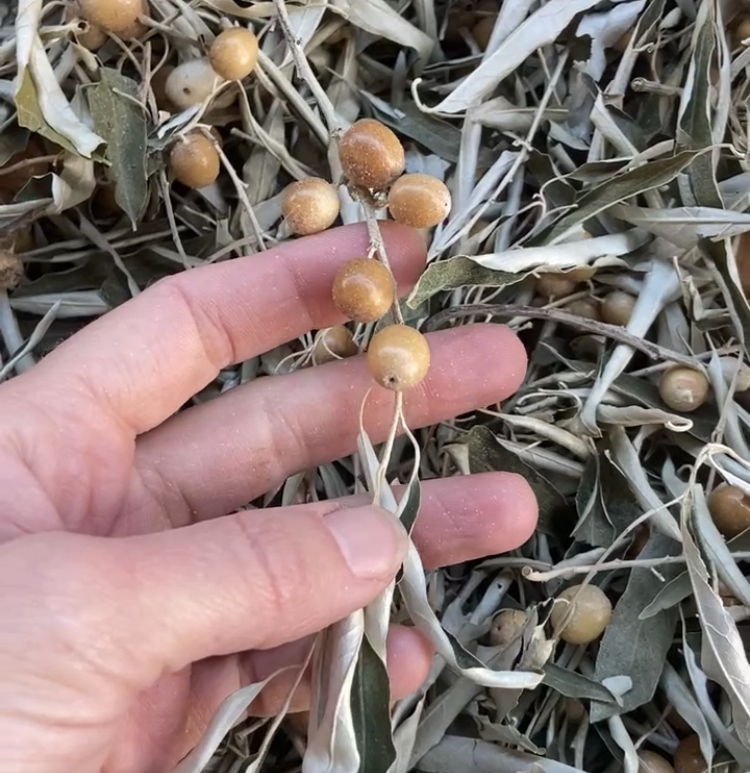
Dried leaves and fruits of Russian olive.
Harvesting
I’ve seen a few different times mentioned as optimal for Russian Olive Harvest, depending on the constituents you are after.
In Colorado, I’ve taken to harvesting the leaves and fruits around October, as the cold nights seem to make the fruits sweeter. Some resources cite that the antioxidant phenolic compounds in the leaves are higher around this time - so I figure if the medicine tastes better AND has more anti-oxidant concentration, why not:)
Cautions! When harvesting, the silvery, peltate scales on the leaves can be irritating to your skin, eyes, and other mucous membranes. After a few itchy episodes, I started using eye protection, a mask, and fully covering my skin. Also, watch out for spraying occurring around or on these plants. Some states or local authorities will spray herbicide on or around these plants to mitigate their spread.

About The Author
Kat Mackinnon, RH (AHG) is the founder and director of Meet the Green. She lives and works on the Front Range of Colorado, where she teaches classes on botany, herbalism, and ancestral skills, and sees clients through her herbalism practice.
Click here to learn more about Kat, or or check out the programs page to learn more about Meet the Green’s offerings!